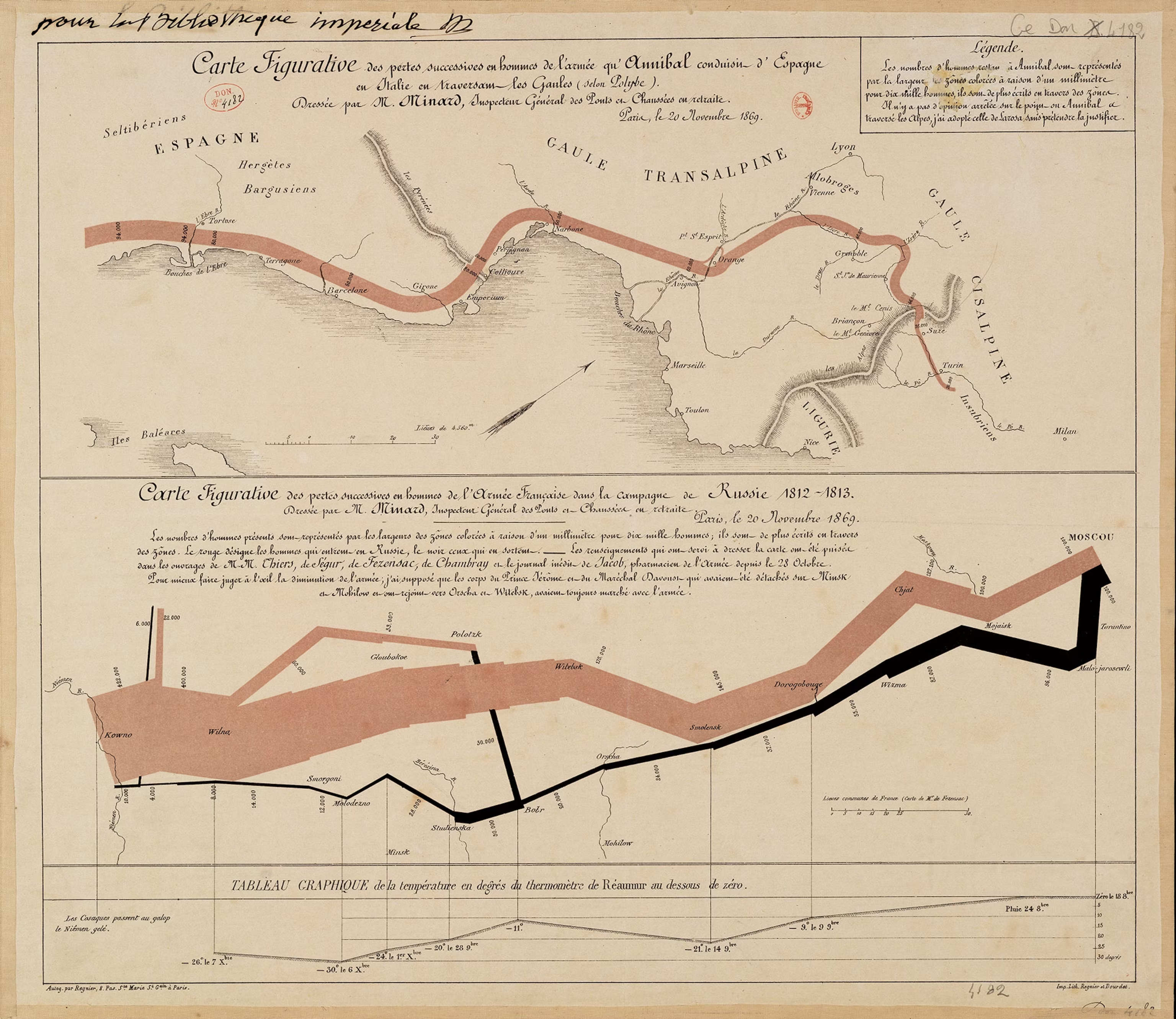
This is the famous Carte Figurative by Charles Minard. The bottom chart demonstrates the advancement and retreat of Napoleon’s troops into Russia from 1812-1813. Napoleon started with approximately 422,000 soldiers and returned with around 10,000. This extreme loss of life has been captured in this data visualization to demonstrate how costly it is to engage in warfare.
Our assignment was simple: reimagine this graphic. Learn all that you can about Minard and find a novel way to interpret the same (or similar) data.
Of course, I did my due diligence and read about Minard’s life and death, his impact on the data visualization community, and interpretations of his chart. Armed with this knowledge, I brainstormed for days, adding a little more to my list of ideas each day.
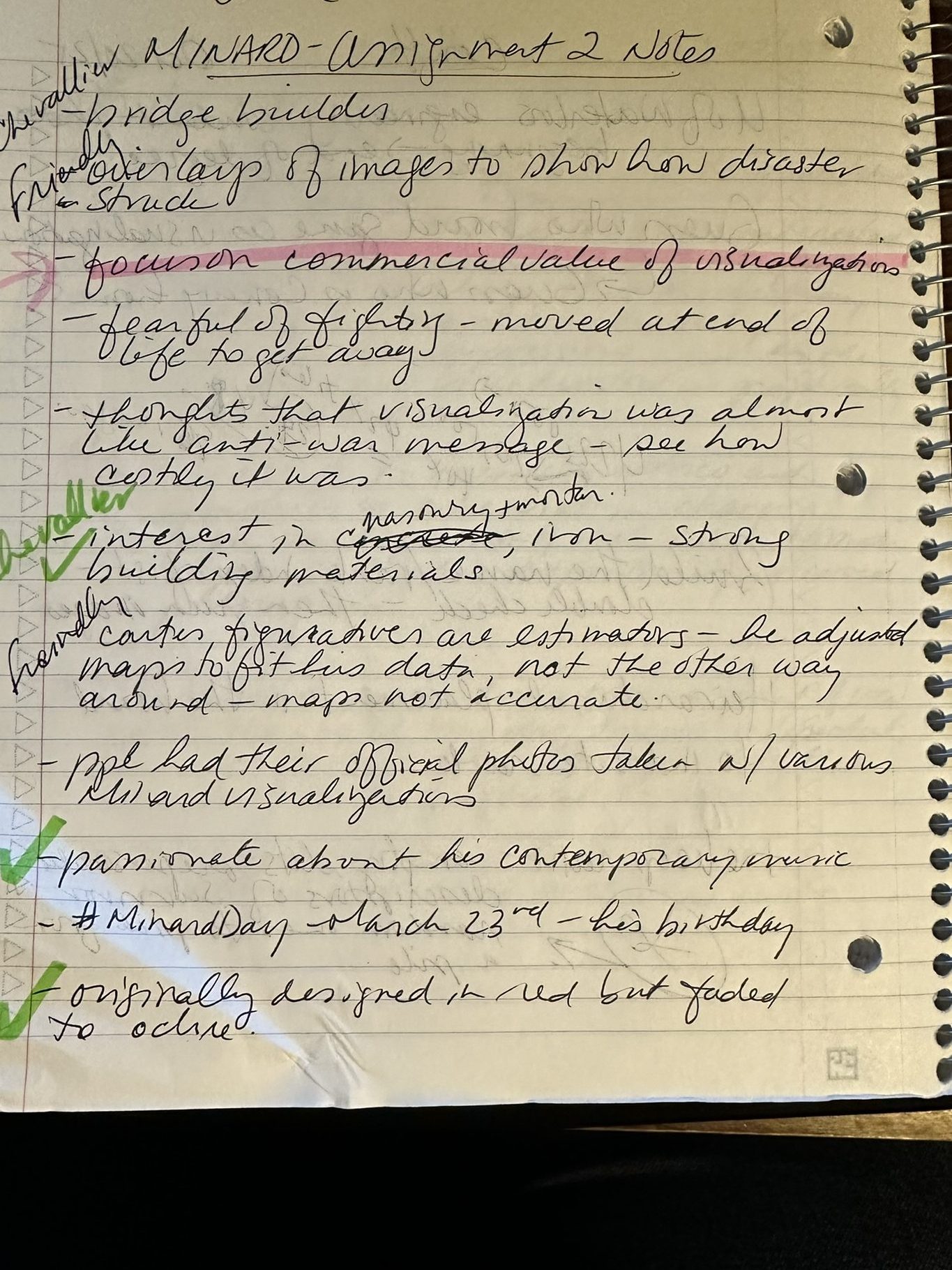
If you are starting to understand a little about who I am, you’ll know that I don’t like to do anything the easy way. I could have focused on a single element of this chart and found a way to emphasize or expand it in some visualization tool. Instead, I got all arts and crafty.
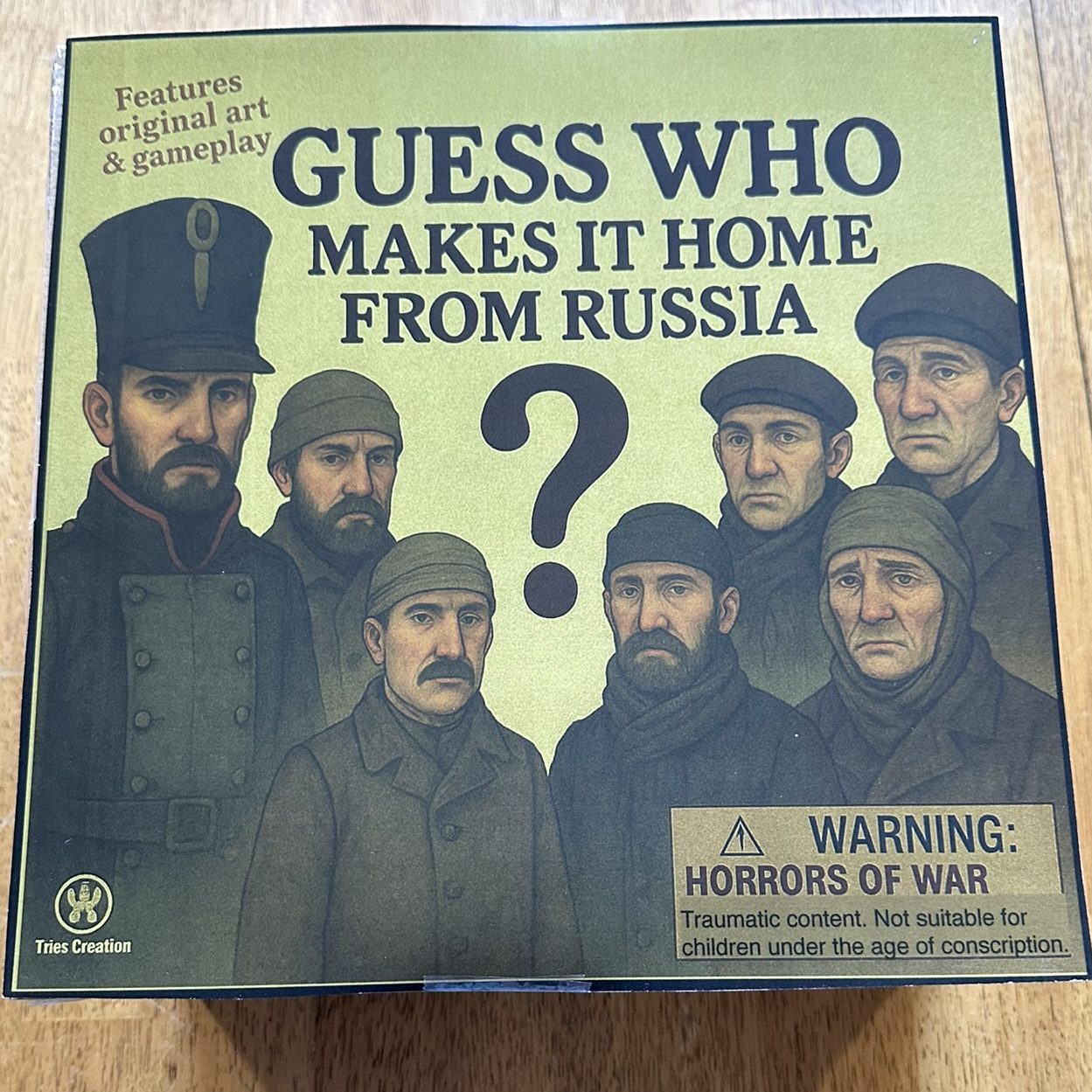
I decided to make Minard’s chart into a playable board game.
One of the things that I felt Minard did not capture was the relationship with his data representation and the people he was trying to represent. It felt like the people who were dying for Napoleon’s doomed cause were numbers only and not people. So, I insisted that I ground my visualization in the likely stories of the soldiers who died.
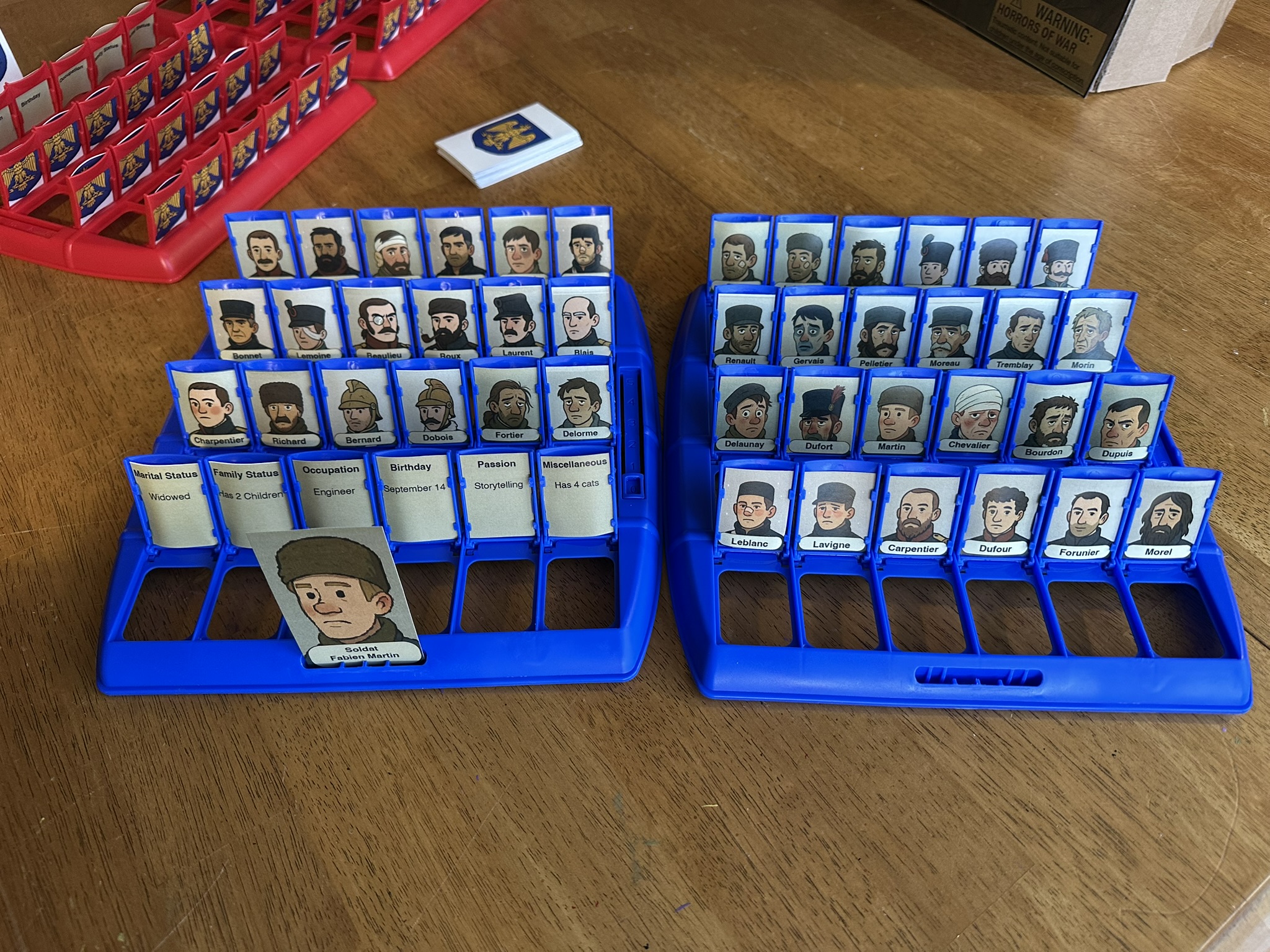
Before gameplay starts, each player picks one “lucky” soldier to return from the war. They also choose six trait cards representing qualities such as marital and family status, occupation, birthday, passion, and miscellaneous fact. Then, each player must come up with a short story containing those traits for their soldier, telling a tale of who they were. Therefore, before you have even made a single move, each player has been reminded that these were people, with goals and life plans, and that Napoleon’s war disrupted it all.
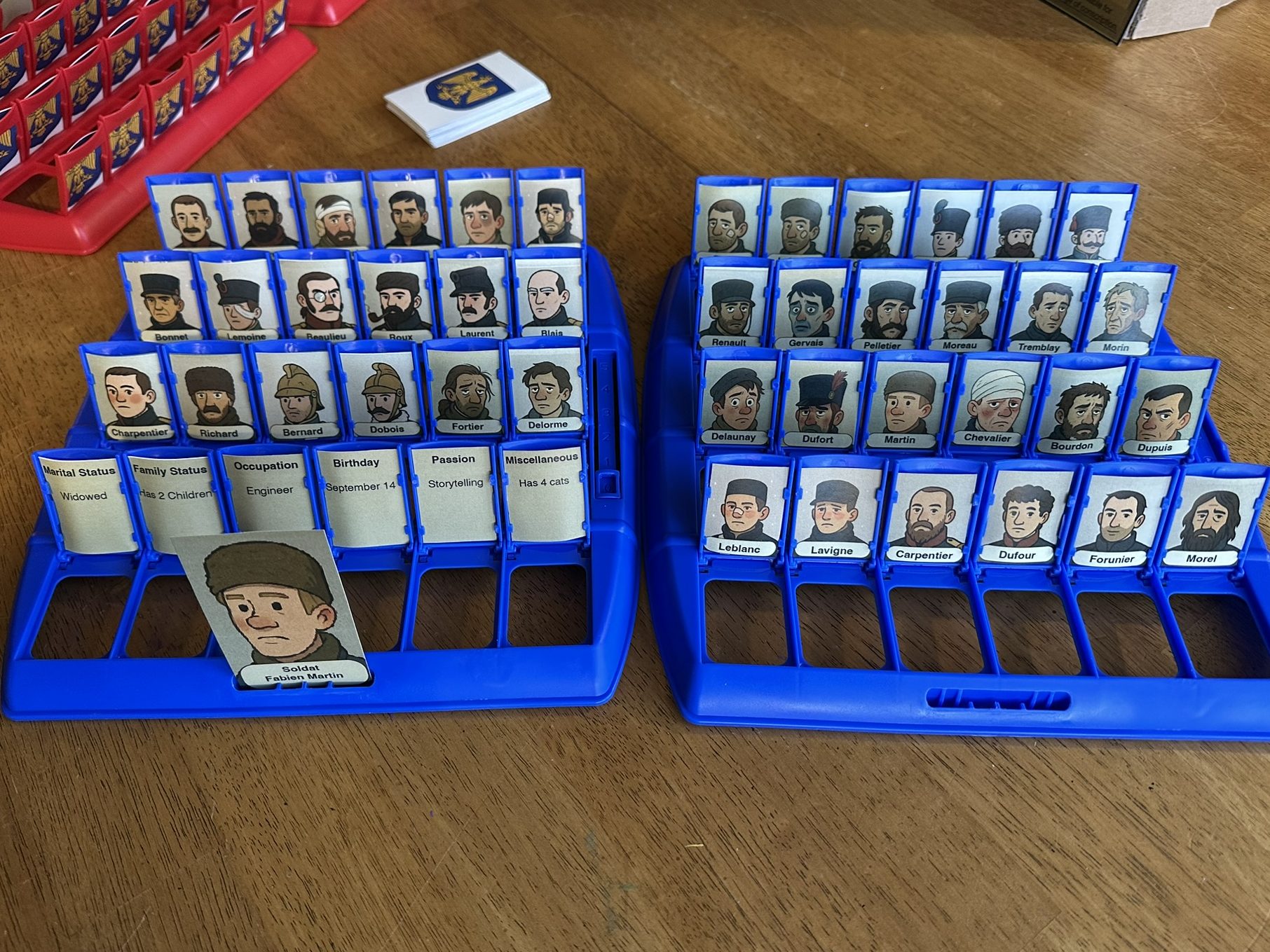
I used two “Guess Who” board games and made two boards represent Napoleon’s soldiers. I had 48 squares total, but I used 6 on each board to humanize the single solider who would be returning home, with the 42 remaining squares each representing 10,000 soldiers.
For the gameplay, I wanted people to have to literally turn the soldiers face down, essentially “killing” them.
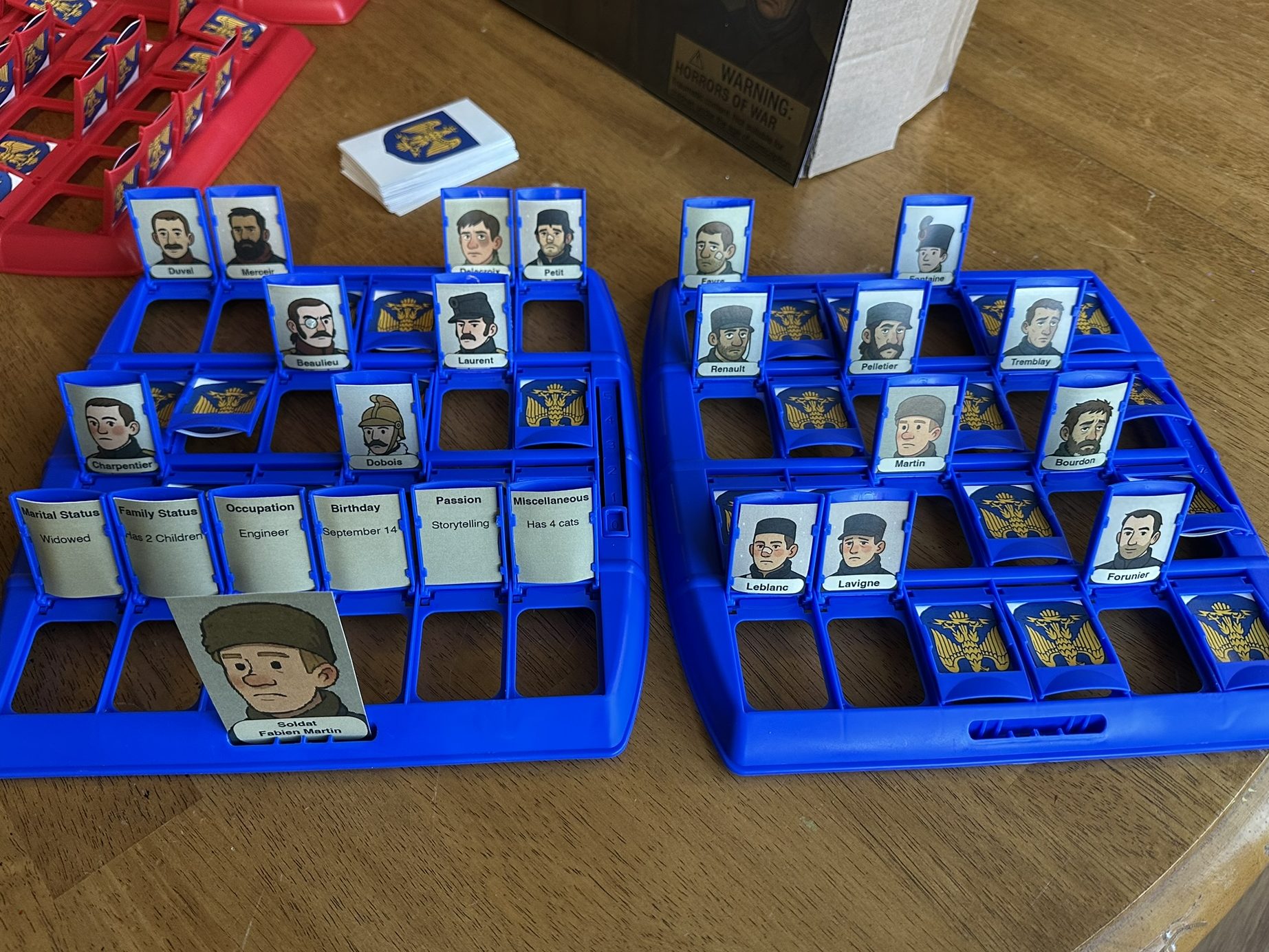
You can see the crest for Napoleon’s army on the back of each soldier’s face and how the game would look as the board started losing significant numbers of soldiers.
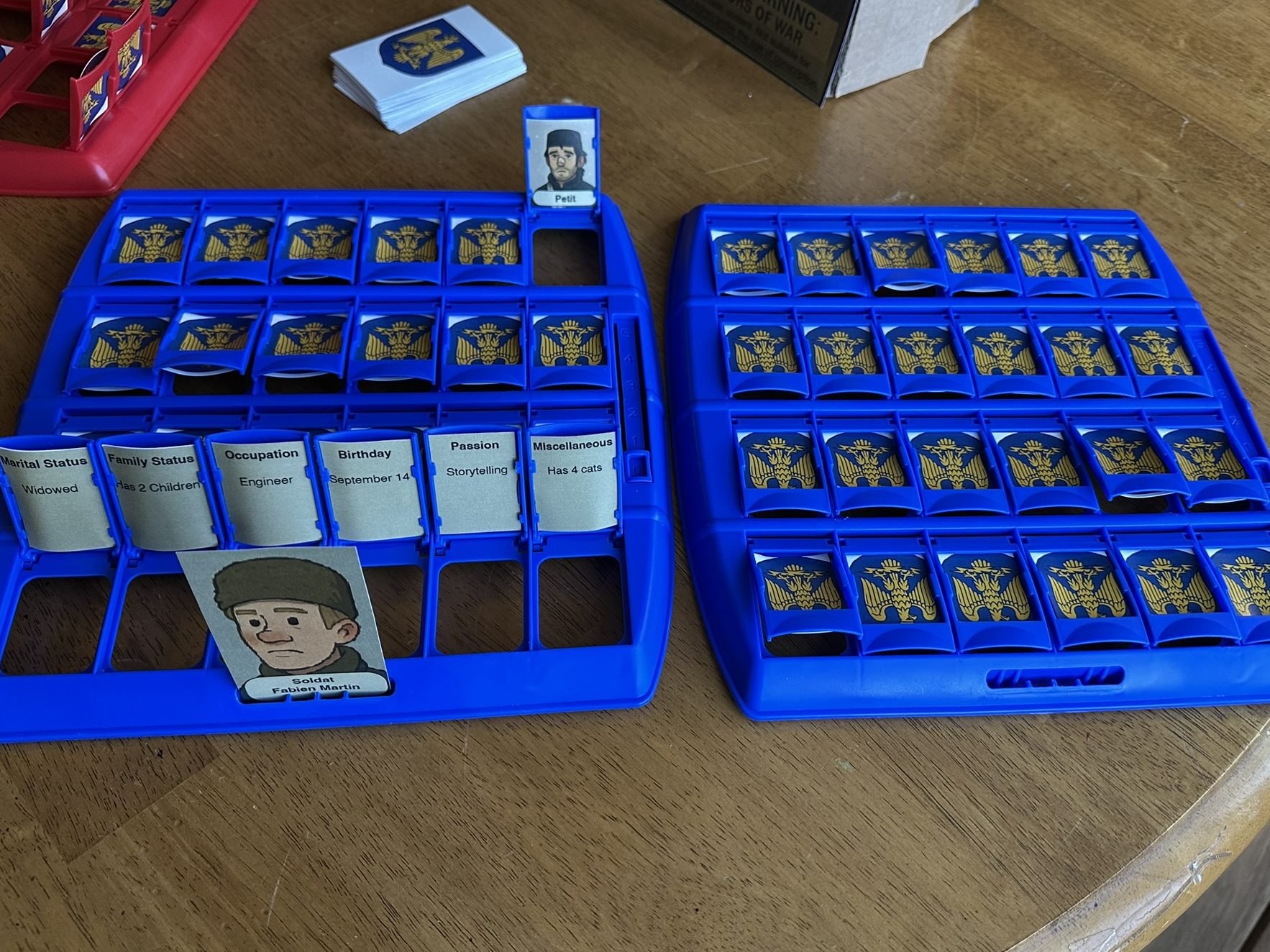
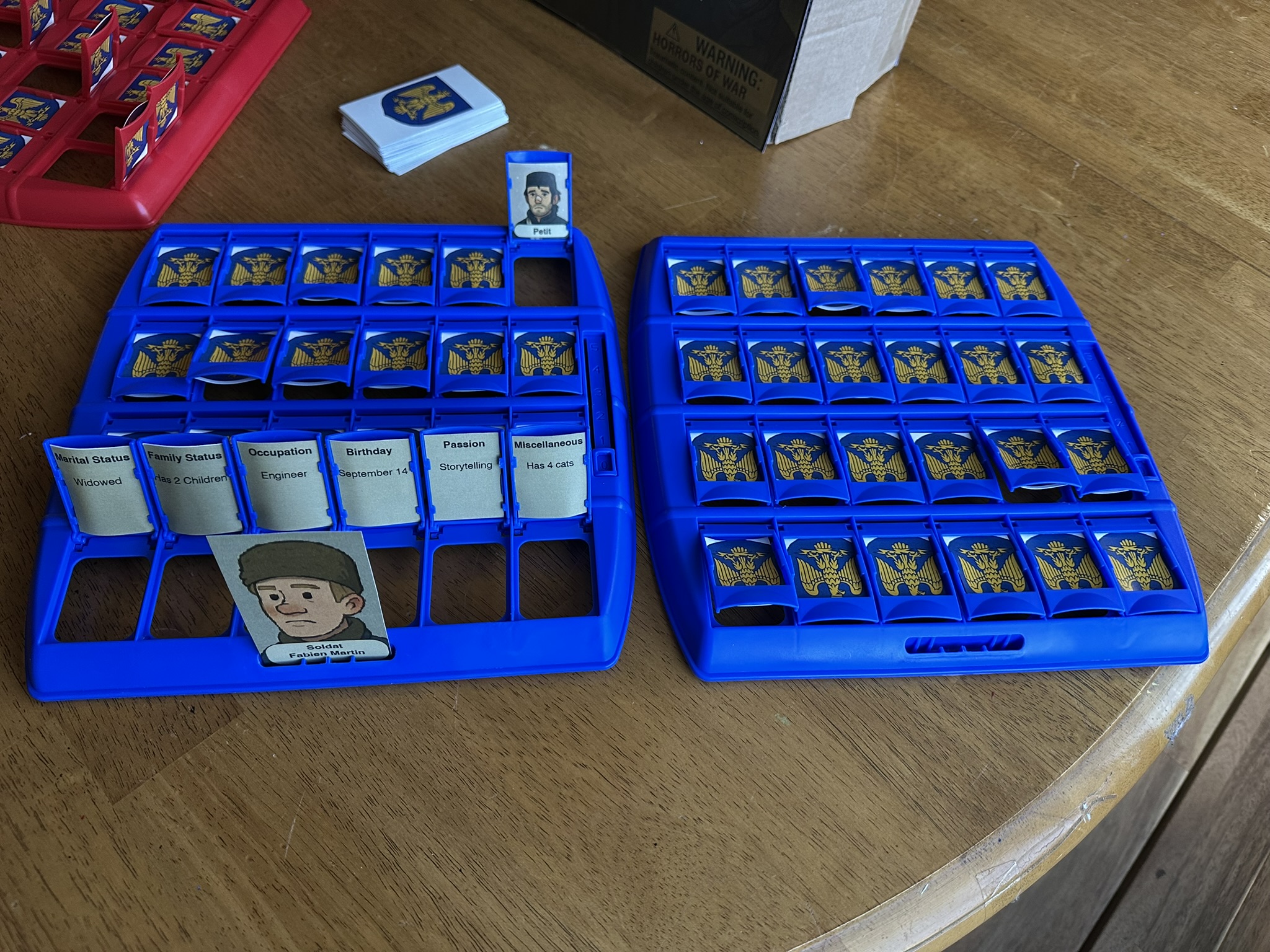
In the end, one player would be left with the single soldier from the other player’s army that survived the march to and from Russia.
Ideally, I would have found a way to join the two boards together so that they weren’t disjointed as they are here, but limitations always abound.
Back to MBAI page
 Sarah McConnell